
ARE YOU PREPARING AND ANTICIPATING THE
CHANGES IN GLOBAL COMMERCE?
We have all been touched by the e-commerce wave, whether as a consumer or a business supplying goods and services. It is clear the internet allows small companies to look and feel like big companies, and large companies to feel like a small company with the way they portray their businesses on the web. This also provides you with an opportunity to support your marketing strategy and position your brand to support your organization’s strategy and mission, and build your brand identity around the world.
A few thought-provoking questions to start the critical analysis: Do you and your organization possess the leadership competencies of Strategic Perspective & Vision, developing a compelling vision and strategy for the organization and its units? Do you and your team understand both the short-term and long-term view of both the organization’s and the overall industry’s strengths, challenges, and opportunities?
In this newsletter, let’s discuss the following questions as you begin the global strategic journey:

Is e-commerce something for you to consider for your business?
What are some of the things you will need to consider?
The World Wide Web is global—are you?
Are you preparing for today and tomorrow’s new normal?
If we bring back manufacturing and markets open to countries worldwide that we have little to no business in, are you prepared to manage these needs?
Are you preparing to support the growth of the manufacturing boom in the U.S.?
How do your customers view you today?
Are you a preferred vendor, solutions provider, or a trusted advisor?
Let’s start from a historical perspective as a level set and move from there.
Significant Events Have Shaped the Future of Companies, Markets, and People
• For example, in retail, the first disruption arrived in the form of department stores. Retailing was originally dominated by local merchants who provided value to their customers by keeping large inventories, extending credit, and offering personalized advice. The industry changed dramatically in the late nineteenth and early twentieth centuries as a result of the first retail disruption: the launch of department stores like Marshall Field and R.H. Macy, to name a few.
• In manufacturing, for the first time, Henry Ford’s entire Highland Park, Michigan automobile factory was run on a continuously moving assembly line when the chassis—the automobile’s frame—was assembled using the revolutionary industrial technique. A motor and rope pulled the chassis past workers and parts on the factory floor, cutting the hours required to complete one “Model T” from 12-1/2 hours to six. Within a year, further assembly line improvements reduced the time required to 93 minutes. The staggering increase in productivity affected by Ford’s use of the moving assembly line allowed him to drastically reduce the cost of the Model T, thereby accomplishing his dream of making the car affordable to ordinary consumers.
• Thirty years ago, listeners tuning into Morning Edition heard about a futuristic idea that could profoundly change their lives.
“Imagine being able to communicate at will with 10 million people all over the world,” NPR’s Neal Conan said. “Imagine having direct access to catalogs of hundreds of libraries as well as the most up-to-date news, business, and weather reports. Imagine being able to get medical advice or gardening advice immediately from any number of experts.
“This is not a dream,” he continued. “It’s internet.”
Events Shape Companies, and Without Change, Your Current Company’s History and
Success Do Not Guarantee Future Success
A key lesson for leaders is that a company’s current success does not guarantee future success.
There are many great American brands that have stood the test of time.
The key to longevity is:
a. Anticipating where the market is going,
b. Making tough decisions,
c. Effectively communicating when changes need to be made.
Leaders Anticipate
One of the key lessons I like to share with you is this… leaders anticipate! Leaders go to where the puck is going, not to where the puck has been.
What is eCommerce?
Electronic commerce, commonly written as e-commerce or eCommerce, is the trading or facilitation of trading in products or services using computer networks, such as the Internet or online social networks. Electronic commerce draws on technologies such as mobile commerce, electronic funds transfer, supply chain management, Internet marketing, online transaction processing, electronic data interchange (EDI), inventory management systems, and automated data collection systems. Modern electronic commerce typically uses the World Wide Web for at least one part of the transaction’s life cycle, although it may also use many other technologies such as email.
How Does eCommerce Work With Our Current Business and Our Retailing Needs?
First, we need to start with the definition of retailing to understand how to manage and utilize it to help us grow our businesses going forward.
Second, we need to explore how we utilize technology to move our businesses forward, like the way the assembly line helped Henry Ford.
The essential mission of retailing has always had four elements: getting the right product in the right place at the right price at the right time. With the explosion of e-commerce, I suggest a fifth element is utilizing the right technology.
Every Sound Business Decision Must Be Rooted in Balance
Balanced Leadership are principles to manage by that, I believe, help optimize business performance while satisfying the needs of your customers, your people, and your stakeholders.
Think Like a Customer
Electronic commerce accelerates the shift of power toward the consumer, which leads to fundamental changes in the way companies relate to their customers and compete with one another. Managers must ask themselves whether their companies can compete in this everexpanding marketplace—and whether they can afford not to. The key considerations are:
• Your ability to create a seamless customer experience, making it as easy as possible for your customers to do business with you.
• Your ability to deliver the goods quickly and as cheaply as possible.
• Whether your company is capable of, and willing to change its business model.
• How do you manage the return process?
• What is your value add that differentiates you from your competitors and creates a first-tomarket advantage?
Feel Like Valued Individuals
From a consumer perspective, your people can create packaging which enables the most unique commerce experience. It provides an infinite possibility of choices in product packaging to fulfill any need—from liquid to fragile, eco-friendly to lifesaving. Your solutions engineers can create a return process that allows the customers the opportunity to make a mistake and not be penalized.
Creating Shareowner Value
In retailing and manufacturing, profitability is largely determined by these factors:
• The margins you can earn
• The frequency with which you can turn your inventory over
• Preventing damage and providing easy returns impacts revenue and profitability
• The return process often is the differentiator for a customer and an important part of the value equation
• Getting it right the first time saves money
Process Maintains Consistency and Ties Everything Together
The process must include factors that achieve operational excellence. Here are some of the things to consider as part of your e-commerce strategy that will help you to achieve scale, scope, and geographic reach as you understand the key parts of the e-commerce chain:
• Should we buy, build, or work with a third party?
• Consolidate products at optimal locations, positioning our inventory close to our customers in major markets—getting to market faster and reducing outbound shipping costs
• Value-added services like quality control and testing; assembly, kitting, packaging, and labeling; and store-ready displays
• Meet exact specifications and do whatever it takes to present your product exactly how your customer wants it
• Returns handling
Finally, it will be important to answer this question as an organization: do we want to be assetlight by optimizing operations with strategic suppliers and working with logistics providers?
Done properly, an e-commerce strategy can generate high recurring revenue from a broadbased customer portfolio. It can create strong brand recognition and can provide the organization with a strategy with low fixed expenses and a strong distribution network for future products and services.
Conclusion – Accelerate Growth ● Streamline Processes ● Achieve Results
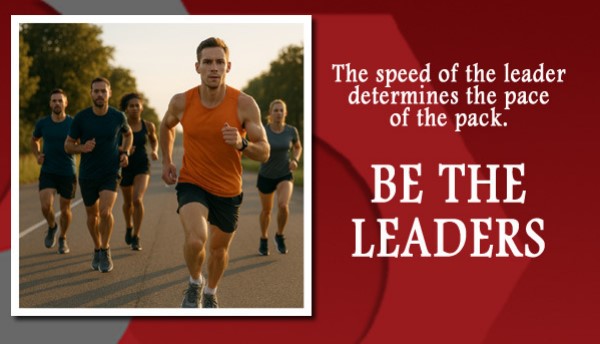
THE SPEED OF THE LEADER DETERMINES THE PACE OF THE PACK. BE THE LEADERS
Take Your Leadership Skills to the Next Level with Tighten the Lug Nuts: The Principles of Balanced Leadership.
https://tightenthelugnuts.com
LOOKING TO BOOK A SPEAKER FOR YOUR NEXT EVENT?
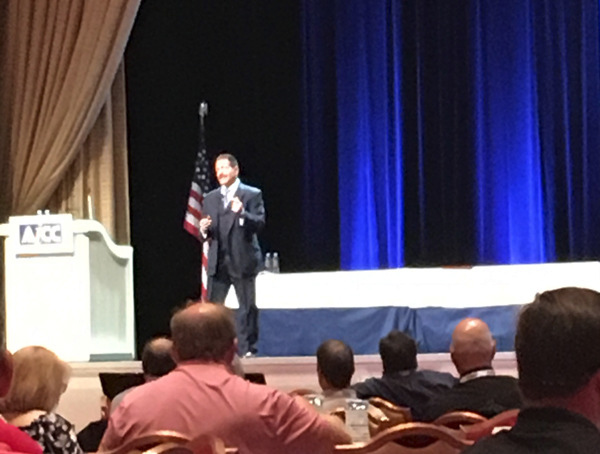
Let’s work together. I am a practitioner as well as an educator and motivator, and an experienced senior leader and CEO with over 45 years of boots-on-the-ground experience. I led one of the largest rebranding initiatives in franchising history – The UPS Store, revolutionizing the $9 billion retail shipping and business services market.
I believe that none of us can achieve success without some help along the way. For each of us, there is a person, a mentor, who we are grateful towards and who can help us get to where we aspire to be. Sharing stories and experiences as a speaker is a way of recognizing the value of these experiences and giving back to the next generation of leaders. It also is a way of demonstrating in words and deed the value I am placing in mentorship. As for me, I have been fortunate to have worked with and mentored by some incredibly special people, and none more incredible than Coach John Wooden.
“Rocky was the Keynote Speaker at our FragilePak Connect Conference. His presentation on Balanced Leadership was educational, informative, and delivered with great energy and enthusiasm. We especially appreciated Rocky attending the conference to learn more about who we are, what we stand for and what we are trying to accomplish as a team. He received a 4.9 score on our survey and the following comments best represent the overall comments.”
“He was the best speaker and had useful life tips”
“Fantastic”
“Amazing”
Rick Schad / VP FP Certified Providers Network
FragilePak

I have broad experiences to share that can help others as they grow and take on new challenges. During my time as president of UPS Supply Chain Solutions, I integrated over 20 acquisitions that became UPS Supply Chain Solutions. I steered UPS’s entry into the health care industry and created the mantra, “It’s a patient, not a package. ®” With the ability to see a clear vision of the changing business landscape, the passion to develop strategies, tactics, and metrics to drive desired results, and the passion to develop the Best, The Brightest, Most Informed, and Best People in the industries they serve.
Please give me a call today at 610-322-0720 or email at
[email protected]
THE LEADERSHIP LIBRARY PODCAST SEASON 8
Looking for quick morning leadership advice in under 5 minutes?
Check out Rocky’s leadership library podcast.
https://tightenthelugnuts.com/podcasts

CLICK HERE TO LISTEN TO THE PODCAST: THE MICROMANAGEMENT FIRE
For more information visit our website https://www.3sixtymanagementservices.com/. My book,
Tighten The Lug Nuts, will also serve as a workbook for these important topics and discussions.
Read my latest Forbes article:

TIGHTEN THE LUG NUTS: THE PRINCIPLES OF
BALANCED LEADERSHIP
Looking to become a better leader or get noticed at your job? Buy Rocky’s best selling book:
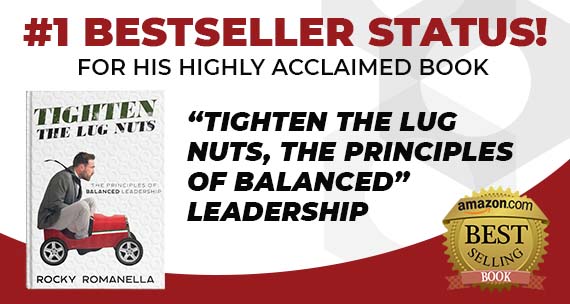
Visit our website, https://3sixtymanagementservices.com, as well as my book, Tighten The Lug Nuts, for additional information.
Contact me at: [email protected].
Have a leadership question for Rocky? EMAIL ROCKY TODAY
For more information or to book Rocky at your next event visit our website at https://3sixtymanagementservices.com
Our Sales Training Workshop Includes Classroom Training and Actual On Road Training as we spend a day with each sales professional.